© 2025 Nadine Amanda design studio
© 2025 Nadine Amanda design studio
© 2025 Nadine Amanda design studio
Akaza
Anywhere but the office
Web Platform
Marketplace
B2B/B2C
End-to-End UX
Product Design

Overview
Overview
This project showcases a remote-first job marketplace built to connect talent with flexible, work-from-home opportunities through modern, intuitive technology. Beyond listing jobs, the platform is driven by a deeper mission: to normalize remote work as a sustainable, long-term standard. By championing productivity, well-being, and operational efficiency, the goal is to empower people to reclaim their time and help companies thrive through smarter, more human-centered ways of working.
This project showcases a remote-first job marketplace built to connect talent with flexible, work-from-home opportunities through modern, intuitive technology. Beyond listing jobs, the platform is driven by a deeper mission: to normalize remote work as a sustainable, long-term standard. By championing productivity, well-being, and operational efficiency, the goal is to empower people to reclaim their time and help companies thrive through smarter, more human-centered ways of working.
Problem:
Problem:
Remote job seekers struggle to find roles that truly match their skills, often facing overwhelming listings and repetitive, requirement-heavy application processes. Employers face the opposite problem. Sifting through mismatched applicants due to unclear or inefficient hiring flows. The challenge was to create a platform that simplifies these tedious experiences and helps both sides quickly find the perfect match.
Remote job seekers struggle to find roles that truly match their skills, often facing overwhelming listings and repetitive, requirement-heavy application processes. Employers face the opposite problem. Sifting through mismatched applicants due to unclear or inefficient hiring flows. The challenge was to create a platform that simplifies these tedious experiences and helps both sides quickly find the perfect match.
Solution
Solution
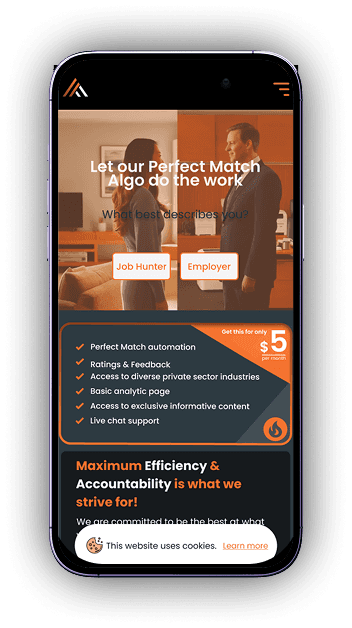
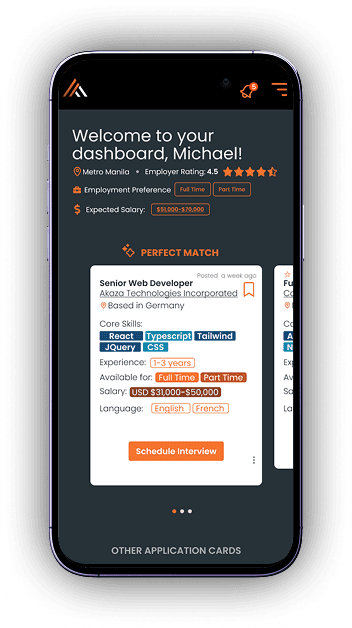
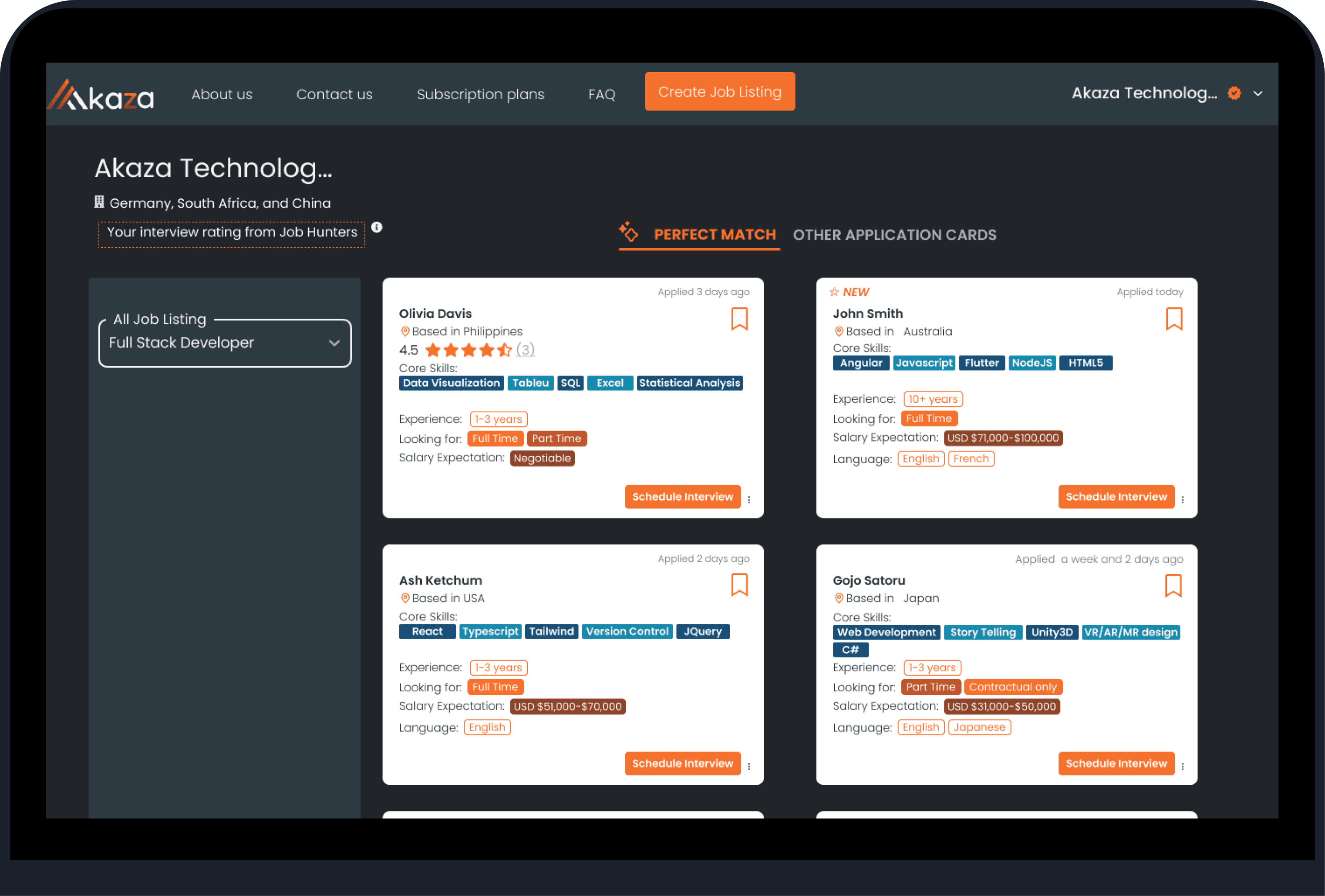
Akaza redesigned the hiring experience to make finding the perfect match faster and more intuitive. I streamlined job discovery to surface only relevant remote roles, simplified requirement-heavy application steps, and created a clearer end-to-end workflow for employers. A unified design system brought consistency across the platform, resulting in a cleaner, more efficient, and human-centered experience for both job seekers and hiring teams.
Akaza redesigned the hiring experience to make finding the perfect match faster and more intuitive. I streamlined job discovery to surface only relevant remote roles, simplified requirement-heavy application steps, and created a clearer end-to-end workflow for employers. A unified design system brought consistency across the platform, resulting in a cleaner, more efficient, and human-centered experience for both job seekers and hiring teams.
My Role
My Role
Director of UI/UX Design (promoted from Senior UI/UX Designer)
Director of UI/UX Design (promoted from Senior UI/UX Designer)
Design Process & Execution
Design Process & Execution
I started by auditing the platform to pinpoint friction in both the job seeker and employer journeys. From these insights, I redesigned key flows—job discovery, applications, job posting, subscriptions, and interview management—to make them clearer and easier to complete. Due to time constraints, extensive user research wasn’t possible, so usability testing focused primarily on feedback from internal team members and investors. I built a scalable component library and created wireframes and prototypes to test hierarchy, navigation, and interactions. After refining designs based on internal feedback, I documented everything for a smooth handoff to engineering. The result is a consistent, scalable design foundation that keeps the hiring experience simple, efficient, and user-centered.
I started by auditing the platform to pinpoint friction in both the job seeker and employer journeys. From these insights, I redesigned key flows—job discovery, applications, job posting, subscriptions, and interview management—to make them clearer and easier to complete. Due to time constraints, extensive user research wasn’t possible, so usability testing focused primarily on feedback from internal team members and investors. I built a scalable component library and created wireframes and prototypes to test hierarchy, navigation, and interactions. After refining designs based on internal feedback, I documented everything for a smooth handoff to engineering. The result is a consistent, scalable design foundation that keeps the hiring experience simple, efficient, and user-centered.
View in Figma
View in Figma
Project Status
Project Status
This project has since been offboarded and is currently in an ongoing improvement phase led by the internal team. All design files, components, and documentation I created remain available in Figma, providing a solid foundation for future iterations and feature expansions.
This project has since been offboarded and is currently in an ongoing improvement phase led by the internal team. All design files, components, and documentation I created remain available in Figma, providing a solid foundation for future iterations and feature expansions.
Next Steps
Next Steps
Although the project itself has been offboarded and is currently paused, there are several recommendations that can guide future improvements if development resumes:
Conduct usability testing with real users
Since earlier testing focused mainly on internal teams and investors, validating the flows with actual job seekers and employers would provide clearer direction for refinement.
Enhance job-matching logic
Improve accuracy by incorporating real user behavior, search patterns, and skill-based filtering.
Refine employer tools
Simplify candidate review, improve visibility of applicant details, and streamline job posting actions.
Strengthen the onboarding and subscription flow
Revisit messaging, steps, and hierarchy to improve clarity and conversion once real usage data becomes available.
Expand the design system
Continue building out components and guidelines to support future features with consistency.
These next steps provide a roadmap for the team if the project moves back into active development.
Although the project itself has been offboarded and is currently paused, there are several recommendations that can guide future improvements if development resumes:
Conduct usability testing with real users
Since earlier testing focused mainly on internal teams and investors, validating the flows with actual job seekers and employers would provide clearer direction for refinement.
Enhance job-matching logic
Improve accuracy by incorporating real user behavior, search patterns, and skill-based filtering.
Refine employer tools
Simplify candidate review, improve visibility of applicant details, and streamline job posting actions.
Strengthen the onboarding and subscription flow
Revisit messaging, steps, and hierarchy to improve clarity and conversion once real usage data becomes available.
Expand the design system
Continue building out components and guidelines to support future features with consistency.
These next steps provide a roadmap for the team if the project moves back into active development.
View Prototype
View Prototype